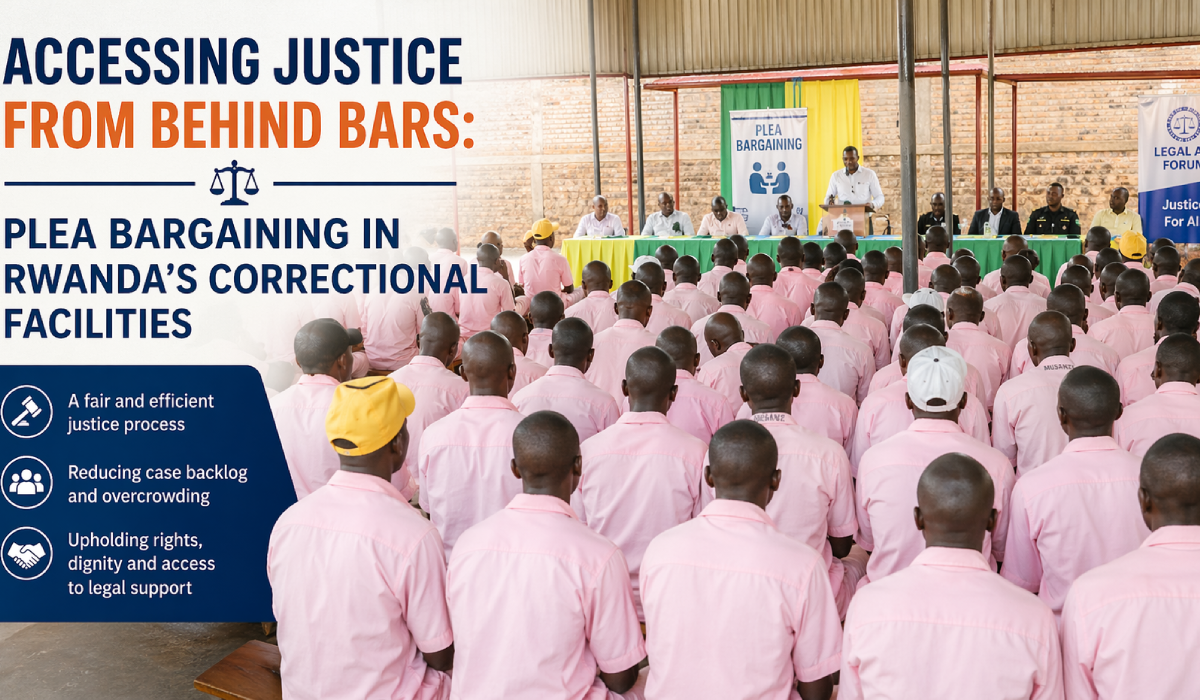
Accessing justice from behind bars: Plea Bargaining in Rwanda’s Correctional Facilities
Sentencing does not mark the end of justice. Even after conviction, access to legal information, representation, and fair process remains essential, particularly for people in correctional facilities. In Rwanda, plea bargaining has emerged as an important response to persistent challenges within the criminal justice system, especially case backlog and overcrowding in correctional facilities. The procedure is governed by Practice Directions of the President of the Supreme Court n° 001/2025 of 03/09/2025 governing the plea-bargaining procedure, and was rolled out by the Judiciary of Rwanda on 11 October 2022, pursuant to Article 26 of Law No. 027/2019.
Since its introduction, plea bargaining has led to the resolution of over 29,000 cases at the first-instance level. The majority (74%) were handled by Primary Courts, with the remainder by Intermediate Courts, demonstrating its effectiveness in reducing court backlogs.
The significance of plea bargaining in Rwanda goes beyond speeding up criminal proceedings. It offers a pathway toward more responsive and humane justice by enabling eligible accused persons to resolve cases more efficiently while helping to reduce pressure on courts and overcrowding in correctional facilities.
The Legal Aid Forum (LAF) has been part of the rolling out process, working in partnership with the Judiciary of Rwanda to help ensure that plea bargaining is not only introduced as a legal mechanism, but also made accessible and meaningful to the people it is intended to serve. Our contribution has included capacity building of key actors on the procedure, as well as providing legal aid attorneys to support detainees through the process by preparing and representing them in their plea negotiations. By placing legal aid attorneys closer to affected individuals, we helped ensure that plea bargaining also upholds the rights and dignity of those navigating it from behind bars.
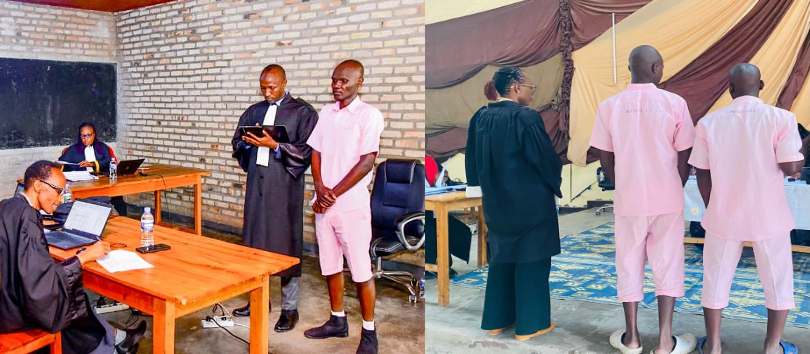
For many detainees, legal procedures remain difficult to understand without guidance. Where legal awareness is limited and legal representation is absent, opportunities for fair and timely resolution can easily be misused. In that sense, plea bargaining can only achieve its intended purpose when it is accompanied by legal support that enables inmates to understand their rights, assess their options, and make informed decisions.
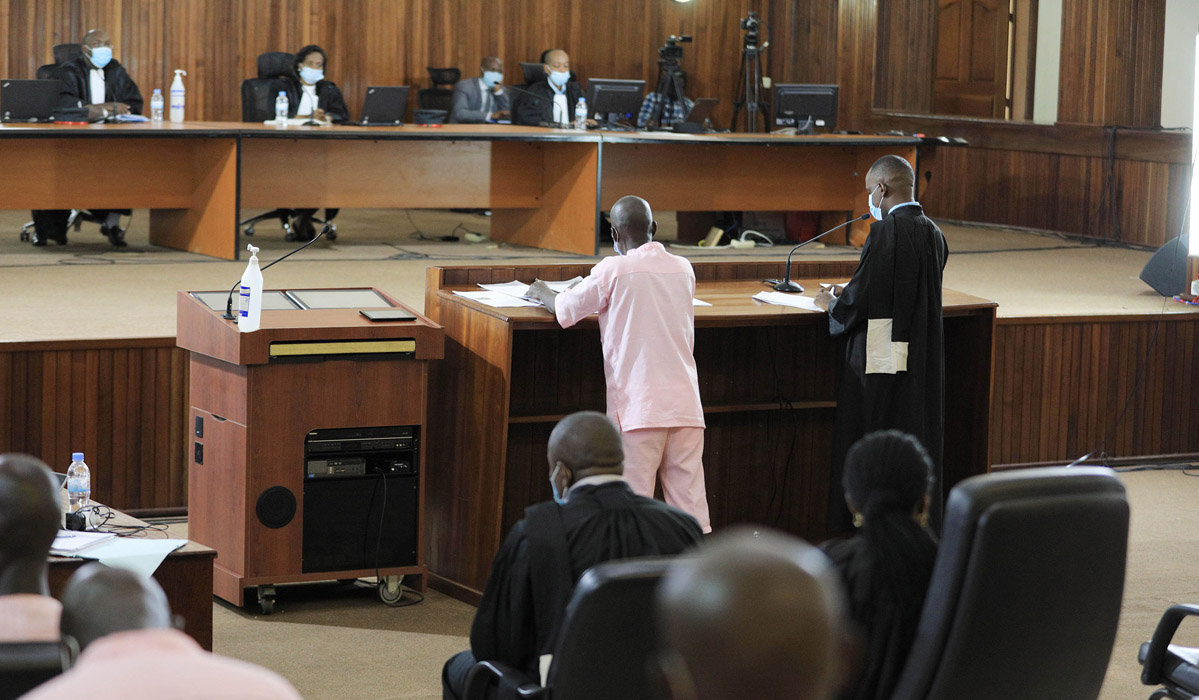
Against this backdrop, in January 2026, Together with the Judiciary of Rwanda conducted a joint intervention to carry out plea bargaining sessions in Muhanga and Musanze Correctional Facilities. Over two days, detainees were sensitized on plea bargaining, received legal consultations, and were supported through legal representation free of charge.
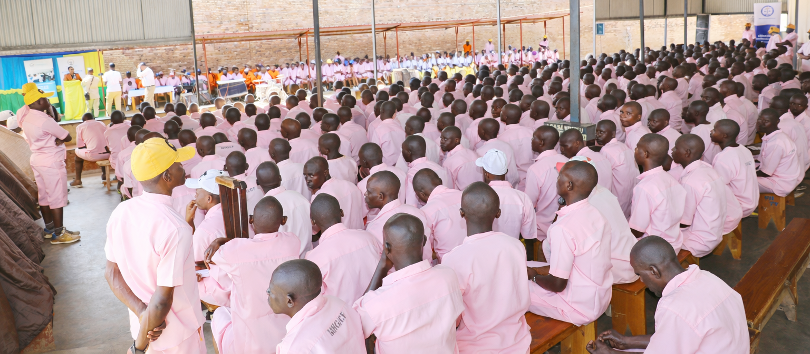
The results underscored both the necessity and effectiveness of the initiative.
A total of 133 detainees received legal assistance, many of whom were able to resolve their cases more efficiently through plea agreements that resulted in reduced or partially suspended sentences. Notably, 8 detainees were released after it was established that they had exceeded the legally permitted duration of pre-trial detention due to delays in case processing. Through plea bargaining, their cases were resolved, enabling their lawful release. The cases handled during the intervention ranged from theft and assault to drug-related and family-related offenses, reflecting the diversity of legal issues present within correctional facilities. For many detainees, this was their first opportunity to receive clear, individualized legal advice and to understand their legal position. This not only enabled more timely case resolution, but also allowed them to participate meaningfully in decisions affecting their liberty.
The January 2026 intervention demonstrated that when legal aid is integrated into the implementation of plea bargaining, it leads to faster case resolution, prevents unnecessary detention, and strengthens access to justice for those behind bars.



.jpg)