
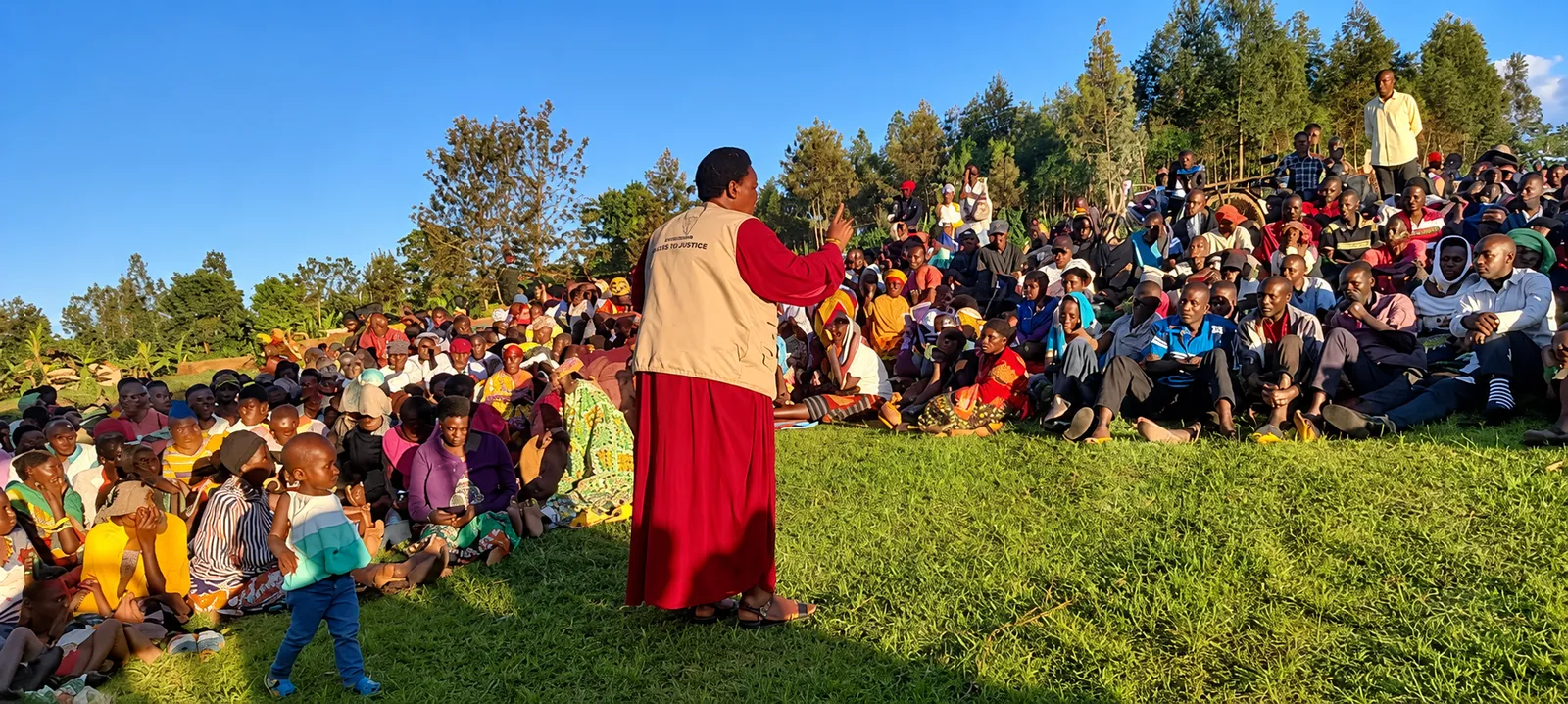
Community-based paralegals are a vital part of Rwanda’s community-based approach to access to justice. As trained and trusted members of their communities, they provide first-line legal support, promote legal awareness, facilitate appropriate dispute resolution and connect individuals with competent institutions when further intervention is required. Through the National Paralegal Network, supported by the Legal Aid Forum, paralegals help bring legal knowledge and assistance closer to people, particularly those who may face barriers in accessing formal justice services.
For many people, access to justice begins long before they enter a courtroom. It begins with knowing their rights, understanding the law, knowing where to seek assistance and having someone to guide them through available legal processes. For vulnerable and underserved populations, financial constraints, geographical distance, limited legal knowledge and the complexity of formal justice institutions can create significant barriers.
In this context, community-based paralegals provide an important and accessible point of support within communities. Their presence enables individuals to obtain basic legal information and guidance closer to where they live, while creating pathways to appropriate justice mechanisms when a matter requires further intervention.
A First Point of Legal Support
Community-based paralegals listen to people facing legal problems, explain relevant laws and procedures in accessible language, help individuals understand their rights and options, and guide them towards appropriate solutions.
Their work covers a broad range of civil, criminal and Gender-Based Violence matters. They assist individuals in understanding their legal problems, provide appropriate guidance, support dispute-resolution processes where suitable, and facilitate referrals to competent institutions when necessary.
Through this role, paralegals serve as a practical link between citizens and the wider justice system, helping individuals navigate legal processes that may otherwise appear complex or inaccessible.
Legal Awareness at the Grassroots
Legal awareness is a central part of the paralegals’ work. Through Community Assemblies, Umuganda, Umugoroba w’Imiryango and other community platforms, they provide information on rights and responsibilities, legal procedures, available remedies and dispute-resolution mechanisms.
Bringing legal information into everyday community settings helps citizens recognise legal issues at an early stage, understand the options available to them and seek appropriate assistance before disputes escalate.
This community-based approach also strengthens people’s ability to make informed decisions about legal matters affecting themselves, their families and their communities.
Promoting Peaceful Dispute Resolution
Where appropriate, community-based paralegals support amicable dispute resolution and mediation. Their familiarity with local communities can help create a trusted environment in which parties are able to discuss their concerns and explore mutually acceptable solutions.
LAF strengthens the capacity of paralegals through training in relevant laws, mediation techniques, practical guidance and service standards. This enables them to respond more effectively to legal issues within their communities while maintaining appropriate referral pathways.
Where a matter requires professional legal representation or formal intervention, it is referred to the appropriate institution or service provider.
Rwanda’s Paralegal Network
The National Paralegal Network, established in 2013 with the support of the Legal Aid Forum, has become an important grassroots justice mechanism. Today, more than 3,000 community-based paralegals serve communities across all 30 districts of Rwanda.
The network demonstrates the importance of positioning trained legal support within communities. By working at the grassroots level, paralegals help ensure that legal information, guidance and pathways to justice are available closer to the people who need them.
Measurable Impact
The impact of community-based paralegals is measured through the number of legal cases handled, citizens reached through legal awareness activities, and the range of legal issues addressed. Every year, community-based paralegals handle more than 5,000 legal cases and reach more than 50,000 citizens through legal awareness activities. These indicators demonstrate the scale and reach of their contribution to justice delivery across Rwanda.
The cases handled span a wide range of civil, criminal and Gender-Based Violence matters. Civil matters include land disputes, divorce and family disputes, succession and inheritance, labour matters, enforcement of judgments, alimony (Indezo), establishment or identification of parentage, and other civil disputes. Criminal matters include theft, assault and bodily injury, genocide-related offences, illicit alcoholic beverages, fraud, drug-related offences, and other criminal matters. GBV and related family matters include defilement or sexual abuse of children, rape of adults, abandonment of the family, and domestic violence and harassment of a spouse.
Legal awareness activities focus on key areas of law affecting communities, including Land Law, Succession and Inheritance, Labour Law, Family and Persons Law, Divorce and Family Disputes, GBV Prevention and Response, and Children’s Rights and Child Protection. These activities equip citizens with practical knowledge of their rights, responsibilities and available justice mechanisms.
Depending on the nature and complexity of a matter, paralegals support amicable dispute resolution and mediation and facilitate referrals to local authorities, Abunzi committees, MAJ, courts, legal aid organisations and other relevant institutions. Matters requiring formal intervention or professional representation are referred to competent institutions.
Taken together, these indicators demonstrate the scale, breadth and community reach of the paralegal network and its practical contribution to reducing financial, geographical, informational and procedural barriers to justice, particularly for vulnerable and underserved communities.
A Sustainable Investment in Community Justice
The experience of Rwanda demonstrates the value of placing trained legal support within communities. Community-based paralegals help identify legal problems early, strengthen legal awareness, facilitate appropriate dispute resolution, support referral pathways and enable citizens to engage more effectively with justice institutions.
For LAF, strengthening this model is therefore an investment not only in legal assistance, but also in community empowerment, peaceful dispute resolution and a more people-centred justice system.
Sustaining this approach requires continued attention to the capacity of paralegals and the systems that enable them to serve their communities effectively. Strong coordination, appropriate supervision, practical support and effective referral pathways remain important to ensuring that community-based legal assistance complements the formal justice system.
LAF’s Call to Action
LAF calls for sustained investment in community-based legal empowerment. Continued support for paralegal training and supervision, practical tools, mobility, digital case management and stronger referral pathways can further strengthen the ability of paralegals to respond to community legal needs.
This effort also requires continued collaboration among justice institutions, local authorities, civil society organisations and development partners to strengthen community-based pathways to justice and ensure that people can access appropriate assistance when they need it.
Justice must be accessible where people live not only where courts sit.
LAF remains committed to strengthening the paralegal network and working with partners to ensure that vulnerable and underserved communities have the knowledge, support and pathways they need to exercise their rights and pursue appropriate remedies.